Heart Information

Genetic Testing

2026/03/05
What is genetic testing?

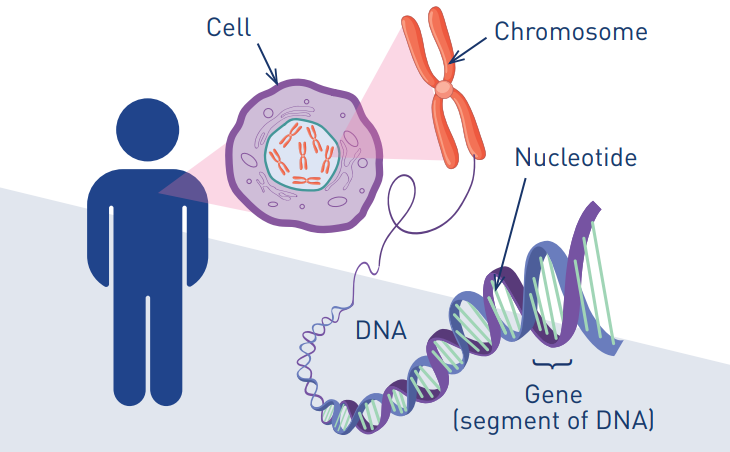
Genetic testing is a type of medical test that examines your DNA (Deoxyribo-Nucleic Acid). DNA are the instructions inside your body that make you who you are. This test can help doctors learn more about your health, such as whether you have or are at risk for certain inherited conditions.

Everyone has genes passed down from their parents. Sometimes, changes (called mutations) in these genes can cause health problems. These changes can be inherited or they can occur spontaneously in an individual without a family history of the condition. Genetic testing checks for these changes.
What are the common types of inheritance?
1. Autosomal Dominant Inheritance


  • Only one copy of the changed gene (from one parent) is enough to cause the condition.
  • A parent with the condition has a 50% chance of passing it on to each child.
  • Both males and females can be affected.


2. Autosomal Recessive Inheritance
  • The condition happens when a person inherits two copies of the changed gene — one from each parent.
  • Parents are usually carriers, meaning they have one changed gene but do not have the condition.
  • If both parents are carriers, each child has:
    • 25% chance of being affected
    • 50% chance of being a carrier
    • 25% chance of neither being affected nor a carrier
3. X-Linked Inheritance
  • The changed gene is located on the X chromosome, one of the sex chromosomes*.
  • Males have an X and a Y chromosome (XY) while females have two X chromosomes (XX).
  • X-linked inheritance usually affects male offsprings more severely, as males have only one X chromosome, and any changed gene present on that chromosome will cause the condition.
  • Female are more likely to be carriers and have mild or no symptoms. They can be affected more severely if they carry two affected X chromosomes.

*Sex chromosomes are specialised chromosomes in the human body that determine the biological sex of an individual. There are two main types: X chromosome and Y chromosome.

4. Mitochondrial Inheritance
  • Caused by changes in the mitochondrial DNA, which is passed down only from the mother.
  • Both males and females can be affected with the condition, but only females pass it on to their children.
Why is genetic testing important?

Knowing the pattern of inheritance helps:

  • Understand your own and your family’s health risks
  • Guide testing for family members
  • Plan for the future, including family planning

When should you consider doing a genetic test?

Genetic testing is voluntary and is a personal choice. It is mainly used for family screening and is typically first done on an individual who has the inherited cardiac condition.

Genetic testing can help in several ways:

  • Confirm or rule out a suspected genetic condition.
  • Detect if you are a carrier (someone who has a gene change but does not have any symptoms).
  • Help guide decisions regarding your medical care or treatment.
  • Inform your family members about their own potential risks

What is required before genetic testing?

Before undergoing genetic testing, a doctor or genetic counsellor will take a detailed personal and family history. This helps identify the potential patterns of inheritance for a medical condition and determines whether genetic testing is appropriate for you.

If genetic testing is recommended, you will first undergo a pretest genetic counselling. During this session, the following points will be discussed:

  • Purpose of genetic testing: Why the test is being done and what it can (and cannot) tell you.
  • Inheritance patterns: How the condition may be passed down through generations and the likelihood of passing on the affected gene(s) to your children.
  • Possible outcomes: The different results that could come from the genetic test and how they may affect you and your family members.
  • Costs: An estimation of what the test might cost.
  • Potential impact on insurance: Understanding whether the results of the test could affect you and your family’s eligibility to get insurance coverage in the future. 

How is genetic testing done?

Once you have given your consent, a blood sample (about the size of 2 tablespoons) will be collected from you at the clinic. The sample will then be sent to an accredited laboratory for analysis.

It typically takes around 3-4 weeks for the results to be ready. In some cases, you may also be asked for additional consent to store these samples for future research or further analysis. This will be discussed with you in detail when you go for the test.

What can I expect from the genetic test results?

Once the genetic test is complete, your results will be reviewed and explained to you by your care team, which may include your doctor, geneticist, or a genetic counsellor. There are a few possible outcomes:

1. Gene mutation(s) identified

The test finds a variant known to cause an inherited condition. If this happens, your family members may also be tested to see if they are affected by the same mutation (this is called family screening). 

2. Gene mutation(s) not identified

The test does not find a variant known to cause an inherited condition. In this case, your family members will not need to be tested, and other forms of family screening will be discussed with you. 

3. Gene mutation(s) of unknown significance identified

The test finds a variant, but it is unclear whether it causes an inherited condition. In this case, your family may not need to be tested, and further steps will be explained.

(The genetic test arranged by your doctor usually only screens for the specific condition(s) you have or are suspected of having; the test does not typically screen for other medical conditions unless deemed necessary by your doctor.)

What happens after getting my genetic test results?

Your doctor or a genetic counsellor will explain your results and what they mean for you and your family. This might include:

  • Regular screening or monitoring
  • Lifestyle changes
  • Informing family members who may also carry the gene change
  • Considering other tests or treatments

If your family members carry the same genetic mutation but do not show any symptoms, they will receive advice on how to continue monitoring their health. The care team will continue to support you and your family throughout this process, offering education on the condition and providing counselling as needed.

Last updated on
Best viewed with Chrome 79.0, Edge 112.0, Firefox 61.0, Safari 11
National University Health System
  • National University Hospital
  • Ng Teng Fong General Hospital
  • Alexandra Hospital
  • Tengah General and Community Hospital
  • Jurong Community Hospital
  • National University Polyclinics
  • Jurong Medical Centre
  • National University Cancer Institute, Singapore
  • National University Heart Centre, Singapore
  • National University Centre for Oral Health, Singapore
  • NUHS Diagnostics
  • NUHS Pharmacy
  • NUHS Regional Health System Office
  • NUS Yong Loo Lin School of Medicine
  • NUS Faculty of Dentistry
  • NUS Saw Swee Hock School of Public Health
Back to Top