Heart Information

Left Ventricular Non-compaction Cardiomyopathy (LVNC)

2026/02/26
What is Left Ventricular Non-compaction Cardiomyopathy (LVNC)?
Left Ventricular Non-compaction Cardiomyopathy (LVNC) is a rare congenital heart condition that happens when the heart's left ventricle does not develop properly. Instead of having a smooth muscle wall, the left ventricle has a spongy appearance because of extra muscle projections and deep spaces between them. 

This unusual structure occurs during fetal development when the heart's muscle fibres do not compact as they should. LVNC can lead to an impaired heart function, irregular heartbeats, and increase the risk of blood clots that becomes a risk for stroke and other cardiovascular conditions.

What are the symptoms?

Symptoms of LVNC can vary widely among individuals. Some may remain asymptomatic, while others may experience:

  • Heart failure symptoms: Shortness of breath, fatigue, swelling in the legs and ankles.
  • Arrhythmias: Palpitations, dizziness, or fainting spells.
  • Thromboembolic events: Stroke or transient heart attacks due to blood clots forming in the heart.
  • Chest pain: Especially during physical activity.

In some cases, LVNC is diagnosed incidentally during evaluations for other cardiac conditions. 

How is it diagnosed?

Diagnosing LVNC involves a combination of clinical evaluation and imaging studies:

1. Electrocardiogram (ECG)

What is it?
An electrocardiogram is a simple, non-invasive test that records the heart's electrical activity and rhythm.

Why is it done?
To detect irregular heart rhythms and screen for structural heart diseases.

D
oes it hurt?
No, an ECG is painless and involves the placement of electrodes on the skin's surface to detect electrical signals. 

Potential risks or complications?
There are virtually no risks or complications associated with ECGs. It's a quick and safe diagnostic tool.

2. Echocardiogram

What is it?
An echocardiogram is a non-invasive imaging test that uses high-frequency sound waves to create detailed images of the heart's structure and function. 

Why is it done?
Echocardiograms are performed to confirm the size of the heart and evaluate its impact on heart function. It is a key diagnostic tool in identifying the underlying heart pathology.

Does it hurt?
No, an echocardiogram is a painless procedure that involves the application of a gel on the chest and the use of a handheld transducer to capture images. It's generally well-tolerated by patients, including children.

Potential risks and complications?
There are no significant risks or complications associated with echocardiograms. It is a safe and widely used diagnostic tool.

3. Cardiac Magnetic Resonance Imaging (MRI):

What test is it?
MRI is a non-invasive diagnostic approach that uses a magnetic field and computer-generated radio waves to create detailed images of the heart’s structure.
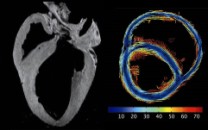
MRI

Why is it done?
To provide detailed images of the heart, including tissue that cannot be seen on a conventional x-ray or echocardiogram, to help in the diagnosis of a suspected left ventricular non-compaction.

Does it hurt?
The scan itself is painless as the patient does not feel the magnetic field and there are no moving parts around the patient. However, some individuals may experience possible feelings of claustrophobia in the machine or be sensitive to the sounds produced by the magnets during the scan, which can cause mild discomfort. Wearing earplugs may help to block the noise. 

Potential risks & complications?
MRI is considered safe for most people as it does not use radiation. However, patients with certain medical devices or conditions may not be eligible for an MRI as MRI uses a strong magnetic field – the presence of metal objects in the body can be a safety hazard or distort the MRI images.


4. Genetic Testing:

What is it?
Genetic testing is a type of medical test that examines the genes in your DNA (Deoxyribo-Nucleic Acid). DNA are the instructions inside your body that make you who you are. Sometimes, changes (called mutations) in the genes can cause health problems. These changes can be inherited, or they can occur spontaneously in an individual without a family history of the condition. 

Why is it done?
This test can help doctors confirm the diagnosis of suspected inheritable heart conditions and determine whether family members need to undergo genetic testing as well.

Does it hurt?
Involves a blood draw for a sample of about the size of two tablespoons; minimal discomfort.

Potential risks and complications:
There are no significant risks or complications associated with genetic testing. Genetic testing is voluntary and is a personal choice. It is mainly used for family screening and is typically first done on an individual who has the inherited cardiac condition.


What are the treatments?

1. Medications

You will be prescribed a combination of drugs, especially if you experience symptoms of heart failure:

  • ARN-I/ ACE inhibitors/ ARBs: lower blood pressure and reduce strain on the heart 
  • Beta-blockers: slow the heart rate and improve heart function
  • Aldosterone antagonists: reduce fluid retention and improve heart function
  • SGLT-2 inhibitors: promote sugar excretion, improving heart and kidney outcomes
  • Diuretics: help remove excess fluid in the body
  • Anticoagulants: helps prevent the clotting or coagulation of blood

Home care advice: Most people take multiple medications daily. Do note to take your medications on time and track any side effects. Please contact your care team if you experience new side effects, worsening symptoms, or missed doses.

2. Implantation of Medical Devices or Surgery

In advanced cases, the implantation of the following medical devices or a surgical transplant may be required to support the heart’s function:

  • Pacemakers or implantable cardioverter defibrillators (ICDs)
  • Cardiac resynchronisation therapy (CRT)
  • Left ventricular assist devices (LVADs)
  • Heart transplant (for end-stage heart failure)

Home care advice: If you experience any fever, swelling of the body, redness at the surgical site, or unusual symptoms, please contact your care team immediately.


Note: Management of LVNC requires a multidisciplinary team approach, including the involvement of cardiologists, genetic counsellors, and in some cases, cardiac surgeons. Regular follow-up and adherence to treatment plans are crucial for the success of the treatment.

Last updated on
Best viewed with Chrome 79.0, Edge 112.0, Firefox 61.0, Safari 11
National University Health System
  • National University Hospital
  • Ng Teng Fong General Hospital
  • Alexandra Hospital
  • Tengah General and Community Hospital
  • Jurong Community Hospital
  • National University Polyclinics
  • Jurong Medical Centre
  • National University Cancer Institute, Singapore
  • National University Heart Centre, Singapore
  • National University Centre for Oral Health, Singapore
  • NUHS Diagnostics
  • NUHS Pharmacy
  • NUHS Regional Health System Office
  • NUS Yong Loo Lin School of Medicine
  • NUS Faculty of Dentistry
  • NUS Saw Swee Hock School of Public Health
Back to Top