NUHS Institutions will NEVER ask you to transfer money or disclose bank details over a call. If in doubt, call the 24/7 ScamShield helpline at 1799, or visit the ScamShield website at www.scamshield.gov.sg.
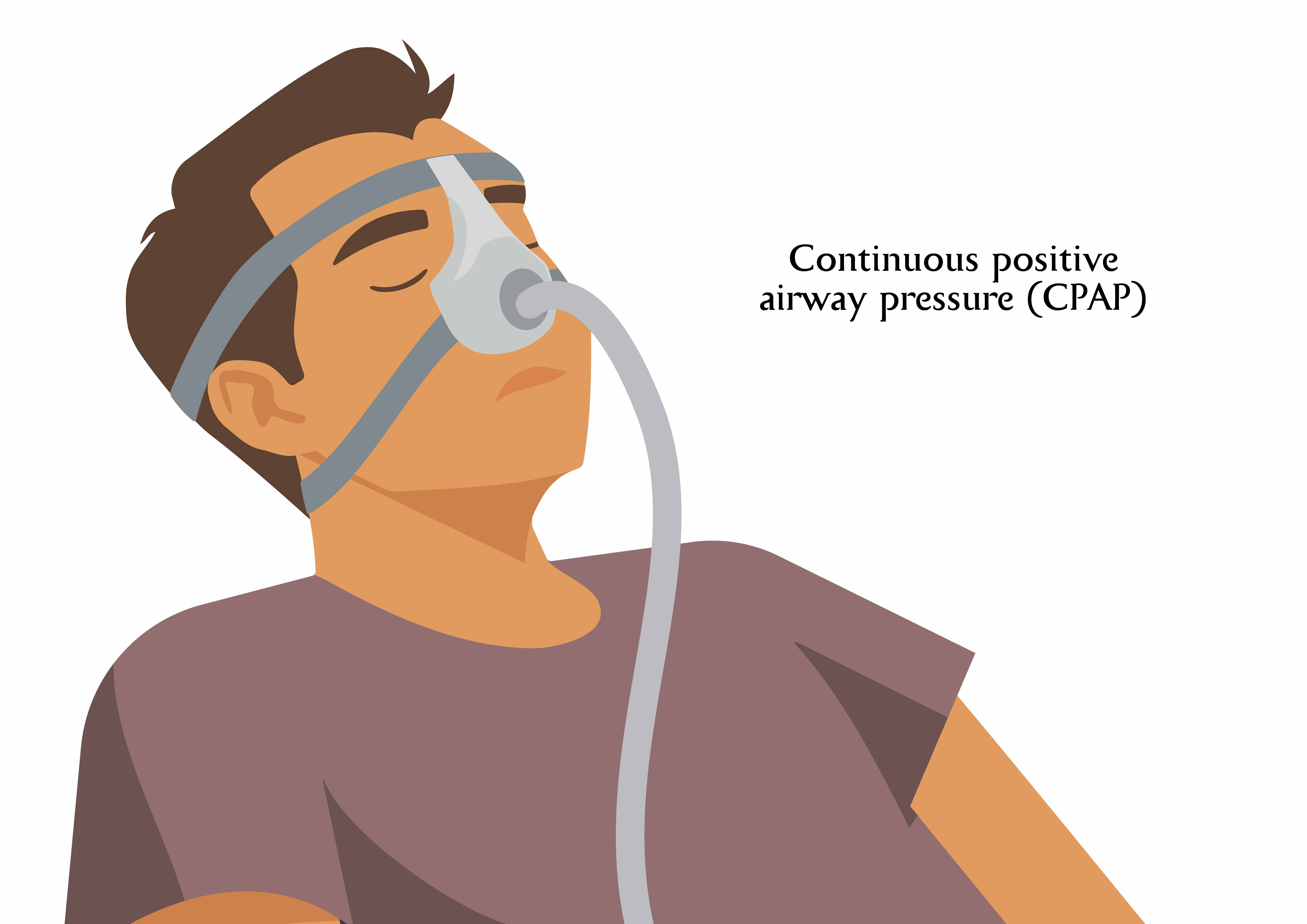
A CPAP machine provides a steady flow of air through a mask to keep the airways open during sleep. This prevents snoring and apnoea episodes, significantly improving sleep quality. More importantly, this treatment can reduce your risk for high blood pressure as a result of obstructed airflow experienced with sleep apnoea, which then reduces your risk for critical health issues such as heart disease and stroke.
What should I prepare?
Preparing for CPAP therapy starts with reviewing your polysomnography (sleep study) results and prescription with your care team. This is so that you can understand why CPAP is recommended as a treatment and what benefits you can expect. At your setup appointment, you will be guided on how you can choose a comfortable mask, operate the machine, clean the equipment, and understand other usage requirements. Before starting, do ensure that you have prepared for a small space at your bedside to place the CPAP machine.
Success rate
CPAP is a well‑established and highly effective treatment for keeping the airway open during sleep. It is also widely recognized as the first line of defence against Obstructive Sleep Apnoea - research has shown that this treatment method significantly improves sleep quality, daytime alertness, and long‑term cardiovascular health outcomes.
Potential risks and complications:
CPAP therapy can feel uncomfortable at first, with issues like mask discomfort, claustrophobia, or sleep disruption. Some people also experience nasal dryness, congestion, or skin irritation from the mask. Most of these side effects improve with proper mask fitting and the use of humidification.
When to call the doctor
If there is increased discomfort from the machine or if you would like to renew your prescription for a new mask and tube.