Heart Information

Renal Denervation (RDN) Procedure

2025/12/23

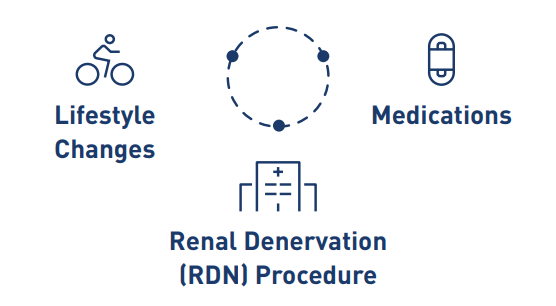
The Renal Denervation (RDN) procedure is an alternative, minimally invasive approach to help reduce high blood pressure, in addition to existing treatment methods such as medications or lifestyle changes.

Your body controls blood pressure in many ways. Your heart, blood vessels and kidneys all play crucial roles in this process. In some people, the nerves connected to the kidneys experience excessive activity, which interrupts the natural process of blood pressure control, leading to high blood pressure.

What is high blood pressure?

High blood pressure, also known as hypertension, is a medical condition where the force of the blood against the walls of the arteries is consistently too high. If untreated, this condition can lead to severe health complications, including heart disease, stroke, and kidney damage.

Often referred to as a "silent killer", high blood pressure may not have any noticeable symptoms, thus regular monitoring of one's blood pressure numbers is important.

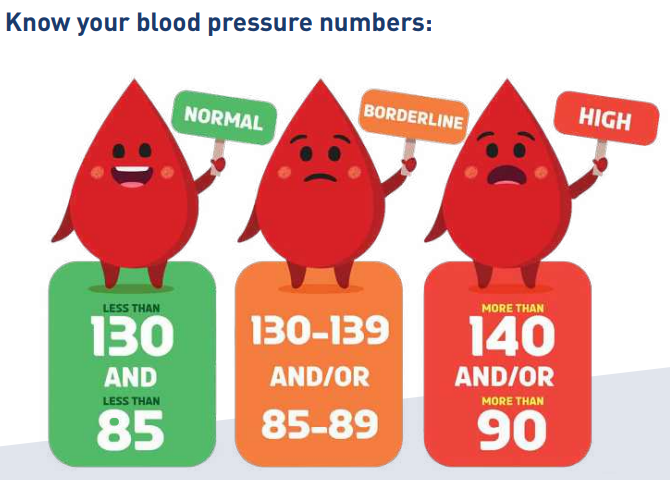
Blood pressure is classified as high if it records 140/90 mmHg or higher when measured on two separate occasions.

Blood pressure results usually consist of:

  • Systolic BP (left/top number): shows how hard your heart is working with each beat
  • Diastolic BP (right/bottom number): shows how relaxed or tight your blood vessels are


What causes high blood pressure?

High blood pressure can be caused by a variety of factors that are either controllable or beyond one's control.

Factors you can control:

  • Diet
  • Lack of exercise
  • Smoking

Factors you cannot control:

  • Family history
  • Race/ethnicity
  • Age
  • Gender
  • Existing chronic conditions like diabetes and kidney disease
What is Renal Denervation (RDN) procedure?
RDN is a minimally invasive procedure that uses radiofrequency waves to disrupt the overactive sympathetic nerves connecting the brain and kidneys. By interrupting their signals, RDN can help lower blood pressure in some patients.
Who is suitable for this RDN procedure?

The RDN procedure provides an alternative treatment option for people with uncontrolled high blood pressure, regardless of the number of medications they have tried or when they were diagnosed.

Eligibility for RDN procedure:

  • Taking multiple blood pressure medications
  • Diagnosed years ago
  • Severe high blood pressure
What are the potential benefits of the RDN procedure?

The RDN procedure reduces high blood pressure, which is shown to lower the risk of serious health conditions.

Reducing your blood pressure by 10 mmHg can lower your risk of:

  • Cardiovascular events by 20%
  • Heart failure by 28%
  • Stroke by 20%
What can be expected from this procedure?

The day of your procedure

  • The procedure is done at the hospital.
  • For most patients, RDN is a one-hour procedure, not including preparation and recovery time.
  • Some patients are able to go home the same day after their procedure, while others may be required to stay overnight at the hospital, depending on the doctor's recommendation.
  • You will be given medication to make you relaxed, sleepy, and comfortable.

After you are sedated, your doctor makes a small (groin) incision and inserts a very thin tube (catheter) into the artery leading to the kidney. The doctor then uses the catheter to calm the excessive activity of the nerves connected to the kidney. Once the procedure is complete, the catheter is removed, leaving no permanent implant behind.

After your procedure

Most patients resume normal activities within a week after the procedure. Your doctor will determine when you can resume your regular activities. You may have two follow-up appointments depending on your doctor's advice:

  • One with the doctor who performed your procedure.
  • One with the doctor who follows up with you on the management of your high blood pressure.

Maintaining a healthy lifestyle after your procedure can help reduce your blood pressure. Here are some tips:

  • Get your blood pressure checked regularly.
  • Follow advice regarding medication, diet, exercise and other lifestyle factors that may impact your blood pressure.
  • Take blood pressure (and other) medication as prescribed by your doctor.
  • Make healthy diet choices by eating fresh, whole foods and limiting sodium, saturated fat, processed food, and sugar.
  • Exercise regularly.
What are the possible risks and complications?

The RDN procedure, just like any medical procedure, has some risks. However, clinical studies show that these risks and side effects are rare.

The safety and effectiveness of this blood pressure procedure have not been evaluated in patients who are pregnant, nursing young babies, or those below the ages of 18 years old.

Careful consideration should be given to use of this RDN procedure in patients with aortic grafts or who have received a renal stent in the last three months.

If you have an implantable pacemaker or Implantable Cardioverter/Defibrillator (ICD), your doctor will need to take precautions prior to your procedure, as these devices can be adversely affected by the radiofrequencies used during the procedure. Your doctor will discuss the necessary steps that need to be taken with your pacemaker or ICD before undergoing the RDN procedure.

You should not undergo the RDN procedure if:

  • You have an allergy or suspected allergy to nitinol.
  • You are unable to tolerate atropine, nitroglycerine, or systemic anticoagulation medication.
  • A reduction in your blood pressure would be detrimental to your health.
  • Your doctor determines that your arteries are too narrow or too wide to insert the catheter.

Your heart rate may decrease during the procedure. If this happens, your doctor will administer medication to increase your heart rate.

Intervention risks include:

Death, cardiopulmonary arrest, heart rhythm disturbances including bradycardia, formation of blood clots and/or embolism (which may result in ischemic events such as myocardial infarction, pulmonary embolism, stroke, kidney damage, or peripheral ischemia), retroperitoneal hematoma, hematoma, bruising, bleeding, arterial damage, arterial spasm, arterial stenosis, arterial dissection or pseudoaneurysm, AV fistula, pain, skin burns, and thermal injury to the vasculature or other structures from energy application.

Contrast agents, narcotics, anxiolytics, other pain medications and anti-vasospasm agents are also commonly used during the procedure or after the procedure; use of these agents is associated with known risks.

Other treatment risks include:

Proteinuria, hematuria, electrolyte disturbances, worsening renal function, hypotension, hypertension, orthostatic hypotension, hypotension causing end organ hypoperfusion, nausea, and vomiting.

Last updated on
Best viewed with Chrome 79.0, Edge 112.0, Firefox 61.0, Safari 11
National University Health System
  • National University Hospital
  • Ng Teng Fong General Hospital
  • Alexandra Hospital
  • Tengah General and Community Hospital
  • Jurong Community Hospital
  • National University Polyclinics
  • Jurong Medical Centre
  • National University Cancer Institute, Singapore
  • National University Heart Centre, Singapore
  • National University Centre for Oral Health, Singapore
  • NUHS Diagnostics
  • NUHS Pharmacy
  • NUHS Regional Health System Office
  • NUS Yong Loo Lin School of Medicine
  • NUS Faculty of Dentistry
  • NUS Saw Swee Hock School of Public Health
Back to Top