Charting New Horizons At AICT-AsiaPCR 2025
Driving collaboration and innovation in interventional cardiology
PULSE Issue 46 | January 2026
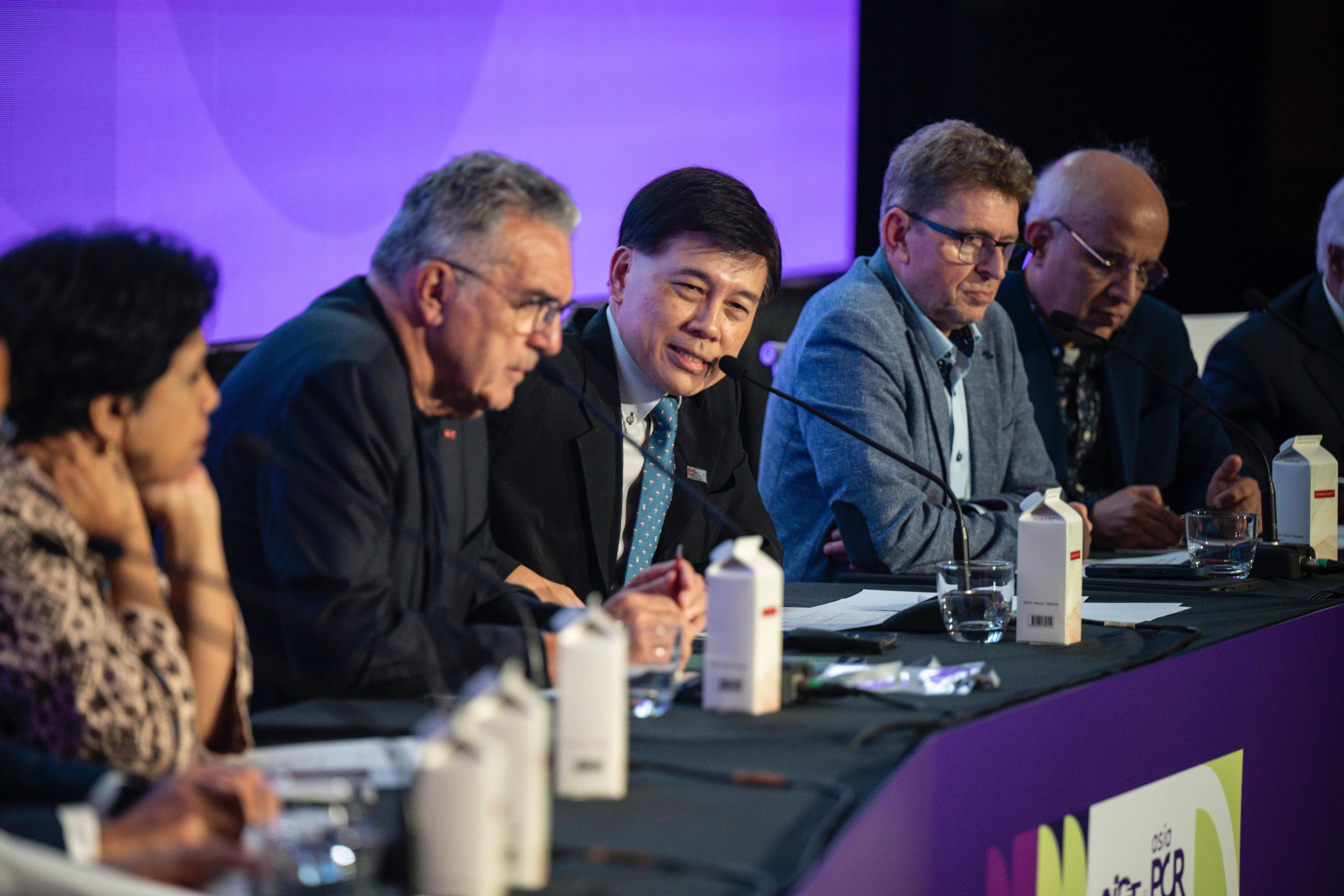
AICT-AsiaPCR 2025 opened in Singapore with energy, curiosity, and a shared mission to advance heart care across the Asia-Pacific region and beyond. The meeting brought together cardiologists, surgeons, nurses, trainees, and industry partners, creating a vibrant community focused on learning, sharing and innovating.
From its beginnings at the National University Hospital two decades ago, the meeting has grown into the official scientific conference of the Asia-Pacific Society of Interventional Cardiology (APSIC). Now partnering with the National University Heart Centre, Singapore (NUHCS), it is held alongside EuroPCR, the European Association of Percutaneous Coronary Intervention (EAPCI)’s main event1, making it a truly international gathering.
About AICT-AsiaPCR
Formed in 2019, AICT-AsiaPCR is an educational platform built by local practitioners, with the support of centres of excellence in Asia Pacific and Europe, to focus on the diverse needs of patients in the landscape of interventional cardiology2.
A global meeting hosted in the Asia Pacific region, this platform allows knowledge exchange between peers and the opportunity for healthcare professionals to showcase research and innovation, aimed at contributing to the latest developments in treatment and care possibilities to better serve the region’s patients.

Learning Beyond the Lecture Hall
Over two days, delegates navigated a packed programme covering coronary, structural7, and peripheral interventions. Formats ranged from symposia and case based discussions to hands-on simulation labs, designed to deliver practical insights for both seasoned specialists and early career clinicians to take away insights relevant to their daily practice.
Highlights included sessions on artificial intelligence and robotics, where Speakers explored how big data and automation are shaping precision and safety in interventional cardiology. Complementing this were sessions on imaging advancements, lesion preparation8 techniques, and mechanical circulatory support9, showing just how fast the field is evolving.
Hands-on simulation remained a highlight. Participants practiced complex procedures, from TAVI implantation to PCI complication management, under expert guidance.
Bringing Real-World Practice to the Stage
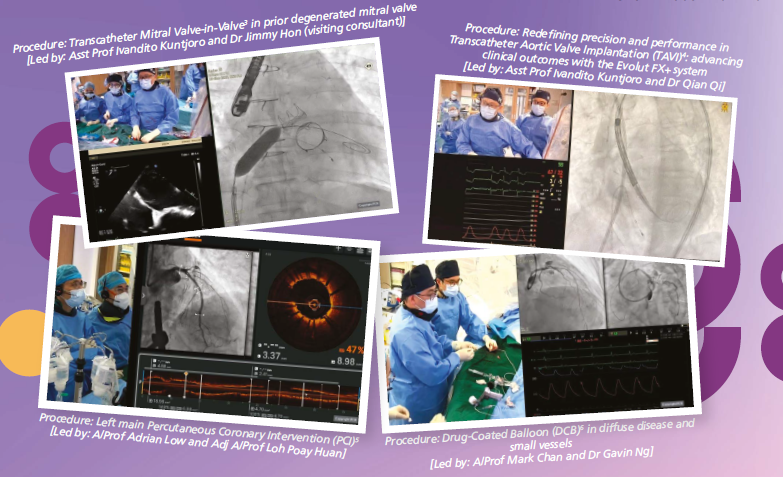
Live case demonstrations are a signature feature of AICT-PCR. This year, institutions from Singapore, India, and Malaysia showcased cases that highlighted cutting-edge cardiovascular intervention techniques.
NUHCS, Singapore’s only live transmission centre, presented four complex heart procedures, including coronary interventions, valve procedures, and advanced imaging-guided treatments. Delegates saw expert decision-making and teamwork unfold in real time, providing a rare and valuable learning experience.
Collaboration Across Borders
More than a scientific meeting, AICT-AsiaPCR 2025 fosters collaboration across borders by uniting faculty from diverse healthcare systems, creating opportunities for shared learning and cross-cultural exchange. Collaborative sessions with international professional societies further enriched the programme, each offering unique perspectives on techniques, technologies, and patient management strategies.
These interactions underscore the event’s role not only as a scientific meeting, but as a regional bridge, linking countries, disciplines, and generations of clinicians in the shared mission of improving cardiovascular care.
Mark your calendars for 23–24 October 2026 when AICT-AsiaPCR returns to Singapore. It promises another year of learning, collaboration, and innovation that can make a difference in patient care.
References:
- European Association of Percutaneous Cardiovascular Interventions (EAPCI) - a registered branch of the European Society of Cardiology (ESC).
- Interventional cardiology - diagnosis and treatment of heart and blood vessel conditions using catheters.
- Transcatheter Mitral Valve-in-Valve - a minimally invasive procedure to replace a failing surgical mitral heart valve by implanting a new valve inside the old one, avoiding open-heart surgery.
- Transcatheter Aortic Valve Implantation (TAVI) - procedure used to treat severe aortic stenosis, a condition in which the aortic valve becomes narrowed and obstructs the outflow of blood from the heart.
- Percutaneous Coronary Intervention (PCI) - a minimally invasive procedure whereby a catheter is inserted into one of the arteries through a small incision, also commonly known as stenting or ballooning.
- A Drug-Coated Balloon (DCB) - a device used in Percutaneous Coronary Intervention (PCI) to treat narrowed heart arteries by delivering medication directly to the vessel wall. This prevents the vessel from renarrowing without leaving a permanent implant.
- Structural interventions in cardiology - minimally invasive procedures using catheters to fix problems withthe heart’s structure (valves, walls, vessels) without open-heart surgery, leading to faster recovery.
- Lesion preparation - a medical procedure to modify a lesion, such as a plaque buildup in an artery, before astent is implanted.
- Mechanical Circulatory Support (MCS) - medical devices to help a weakened heart pump blood, either temporarily or permanently.