Early Discharges, Smarter Planning, Faster Scans
Inside three projects that streamline care and enhanced patient recovery
PULSE Issue 46 | Jan 2026
Healthcare innovation is not only about new technology or treatments; it is also about finding better ways for patients to receive care and recover safely. Across the wards, clinics, and diagnostic areas at the National University Heart Centre, Singapore (NUHCS), the team is always looking for ways to support patients more efficiently and meaningfully. Every improvement, no matter how small, can make a patient’s journey feel safer, clearer, and more comfortable.
In recent months, three groups turned that commitment into tangible change. Their projects help patients return home earlier, receive essential heart scans without long waits, and feel supported throughout every step of their care.
The Same Day Discharge Service, the Accountable Discharge Care Model, and Project F.A.S.T. exemplify these improvements in action.
Going Home Sooner, Safely
For patients undergoing selected heart procedures such as angioplasty1 or stenting2, hospital stays traditionally lasted overnight for post-treatment observation. Today, many eligible patients can go home within hours of their heart treatment procedure through the Same Day Discharge service, while still staying safe and supported.
Introduced across NUHCS @ National University Hospital (NUH) and NUHCS @ Ng Teng Fong General Hospital (NTFGH), this service allows eligible patients to recover comfortably at home after their procedure. The NUHCS care team follows up the next day through a teleconsultation, ensuring patients continue to have access to cardiac rehabilitation and support services that can help them adjust back to their everyday lives.
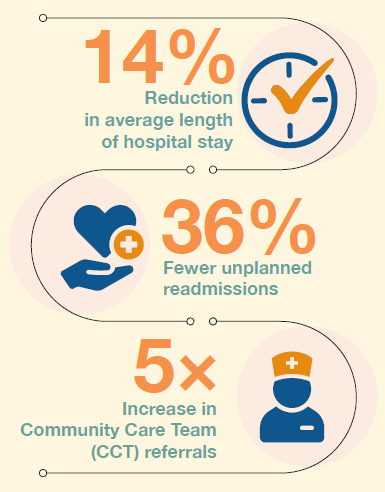
“Same-Day Discharge service enhances the patient experience without compromising safety,” says Dr Gavin Ng, Clinical Director of the Interventional Cardiology and Angiography Centre, NUHCS. “It also offers cost-saving benefits to our patients in terms of hospitalisation expenses and helps us manage inpatient bed capacity more efficiently.”
Since its launch, more than 200 patients have benefitted from the service. A study led by Yap El Fuon, Assistant Nurse Clinician, NUHCS, found that rates of heart attack, vascular complications3, and readmission were comparable between same-day discharge and overnight-stay patients, demonstrating that earlier discharge can be achieved safely.
Patients have responded positively, sharing that they feel more comfortable recovering at home while still feeling well supported by their care teams. Encouraged by these results, NUHCS is expanding the service to include selected pacing and electrophysiology procedures4. This expanded approach reflects NUHCS’ commitment to helping patients recover comfortably and confidently, while maintaining the highest standards of safety and care.
Building Accountability into Every Hospital Discharge
While some patients are ready to go home sooner, others may face delays in discharge even when they are medically ready. To make this process more coordinated, NUHCS developed the Accountable Discharge Care Model – a structured, nurse-led framework that supports timely and holistic discharge planning.
Implemented in one of the wards, the model adopts the 4M approach — Mobility, What Matters, Mentation, and Medication — to ensure that each patient’s physical, mental, and social needs are addressed early during their hospital stay.
Previously, discharge planning often began near the end of a patient’s admission. With this new approach, nurses now identify high-risk patients early in their stay and collaborate with other healthcare teams through a shared digital platform. This platform enables real-time updates and provides multidisciplinary access to discharge information, supporting timely and coordinated decision-making. This empowers nurses to take greater ownership of discharge planning and ensures that patients and caregivers receive clear guidance, prompt support, and well-coordinated follow-up care.
Faster Access to Vital Heart Scans
Before treatment can begin, timely diagnosis is crucial — and for many heart patients, that starts with a Transthoracic Echocardiogram (TTE)5 ultrasound scan.
To meet the growing demand for TTEs and shorten waiting times, NUHCS launched Project F.A.S.T. (Faster Appointment for Subsidised TTE). The goal was to help patients get their scans sooner.
The “Appropriate TTE Order Guide” was introduced to help prioritise resources for patients who are clinically urgent. NUHCS also developed a “Limited TTE Protocol” for patients who do not require a full scan. These focused scans take about half the time of a standard TTE and cost less, while still providing sufficient diagnostic results.
From January to April 2025, 85 patients were offered earlier appointments for the Limited Echocardiograms, which then opened up capacity for additional scans for other patients. This increase in available appointments has allowed more patients to receive care. Consequently, the median wait time for subsidised TTEs has decreased, marking a significant improvement for patients in need of these crucial diagnostic tests.
Smarter, Seamless Care for Every PatientTogether, these three initiatives reflect NUHCS’ ongoing commitment to improving the patient journey from admission to recovery and beyond. By enabling earlier discharges, improving better coordination of care, and reducing waiting times for essential heart scans, NUHCS teams are making care safer, more efficient, and more seamless for patients.
References:
1. Angioplasty - a medical procedure used to open narrowed or blocked blood vessels, most commonly the coronary arteries that supply the heart.
2. Stenting - a surgical procedure to insert a small, mesh tube called a stent into a body passageway, such as a blood vessel or airway, to hold it open. This is often done to treat narrowed or blocked arteries.
3. Vascular complications - problems that affect the blood vessels, which can lead to conditions like stroke and heart attack.
4. Pacing and electrophysiology procedures - medical interventions used to diagnose and treat heart rhythm disorders. These include implanting a pacemaker under the skin to send electrical pulses and maintain a regular heartbeat.
5. Transthoracic Echocardiogram (TTE) - a non-invasive ultrasound scan that creates images of the heart to assess its structure and function.