Leading Cardiology Forward
An interview with the new head of cardiology for NUHCS @ National University Hospital (NUH)
PULSE Issue 47 | July 2026
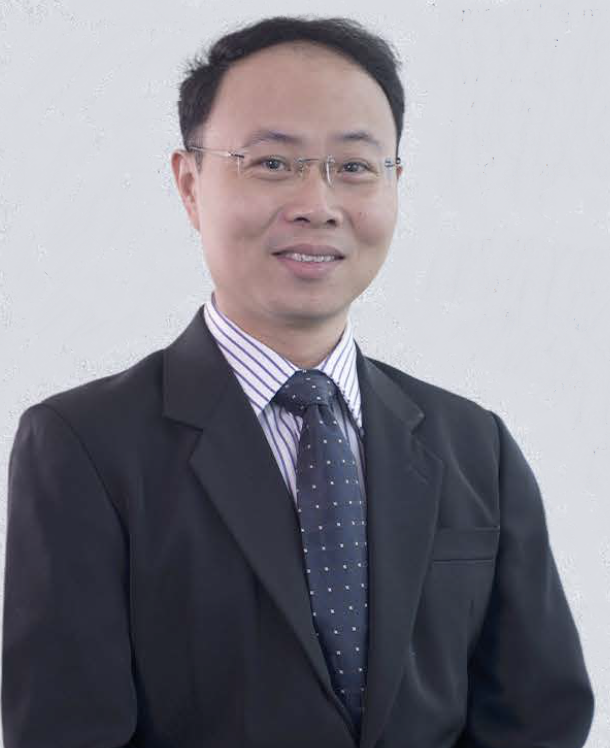
Stepping into the new role as the Head of Department (HOD) of Cardiology at the National University Heart Centre, Singapore (NUHCS) @ National University Hospital (NUH), Adj A/Prof Raymond Wong brings with him years of experience in both clinical care and education.
Known for his thoughtful approach and steady leadership, he shares perspectives on the future of cardiology, the challenges that matter most, and what continues to drive him in a field where every decision carries weight. In this issue, PULSE sits down with Adj A/Prof Raymond Wong to uncover more of the journey and commitment behind his practice.
PULSE: Stepping into this new role, what is your vision for cardiology in the next 3-5 years?
Adj A/Prof Wong: Not just for the next five years, but for the decades ahead, my vision for cardiology can be summed up in two words: quality and value. Quality should define every aspect of care, from diagnostics and procedures to the compassion we bring to patients. At the same time, value must guide how we innovate, allocate resources, and deliver care in a sustainable way. When quality and value go hand in hand, we can achieve the best outcomes for patients and the community, while ensuring care remains accessible and appropriate.
PULSE: What emerging trends should the public pay more attention to?
Adj A/Prof Wong: With rapid scientific advances and the rise of Artificial intelligence (AI), medicine is progressing faster than ever. But just as important is a shift in mindset — to see health as a continuum that includes prevention, treatment, rehabilitation and palliation1. At the same time, we must recognise the limits of modern medicine. Expecting doctors to be a healer and counsellor all at once may lead to disappointment. Healthcare is where hard science meets humanity, and that balance is not always easy to achieve.
PULSE: What is something about heart health today that concerns you?
Adj A/Prof Wong: Prevention remains my biggest concern. It is easy to talk about prevention, but much harder to practice. Inspiring people to take charge of their health today to avoid problems tomorrow, continues to be one of the greatest challenges. Ultimately, prevention is not just advice. It is a mindset that shapes long-term health.
PULSE: Cardiology is both fast‑paced and high‑stakes. What do you find most rewarding about this field?
Adj A/Prof Wong: The pace and intensity are exactly what make practicing cardiology so energising. What I find most rewarding is the ability to care for patients across the entire journey — from prevention and early risk management to acute intervention and long-term care, or even palliation when needed. The field continues to evolve, with new treatments, care models, pharmacotherapy2, and advanced interventional procedures3, supported by cutting-edge imaging technologies. That constant progress keeps me engaged and motivated.
PULSE: What inspired you to specialise in cardiology, and how has your passion evolved over the years?
Adj A/Prof Wong: What first drew me to cardiology was the opportunity to make a real difference during cardiac emergencies. The urgency and gravity of those moments demand focus and decisiveness, and that continues to motivate me. Over time, my interest has also grown in understanding heart disease more deeply and exploring new ways to treat it. That sense of discovery keeps the work meaningful.
PULSE: Is there a moment in your career that reminded you why medicine matters so deeply?
Adj A/Prof Wong: With every Cardiopulmonary Resuscitation (CPR), whether successful or not, I am reminded why medicine matters. Delivering difficult news to a patient or family is never easy, and those moments stay with you. At the same time, being able to offer comfort and reassurance gives me the strength and purpose to continue caring for the next patient.
PULSE: Tell us something intriguing about yourself that others may not know.
Adj A/Prof Wong: I speak multiple languages including English, Mandarin, Malay and even dialects such as Hokkien, and sometimes patients assume I am from different parts of the region. Being able to communicate in their preferred language helps build trust and connection. Outside of work, I stay active through gym sessions, jogging, and recreational badminton. I also enjoy reading and watching sports programmes. I turn to creative writing to help me relieve stress through reflection and to rediscover the nuances of life. Perhaps what surprises people most is that I was once the lead singer of a pop band during my university days. That said, I would do a terrible job if I ever had to dance! In the past, I have also dabbled in competitive badminton, Bridge card games, and volleyball.
PULSE: If you were not a cardiologist, what would you be?
Adj A/Prof Wong: I have always been fascinated by the cosmos. If I had not pursued medicine, I might have become an astrophysicist. I once applied to study aerospace engineering in the United States, with the hope of working at the National Aeronautics and Space Administration (NASA) and contributing to space exploration. The idea of pushing boundaries of human understanding has always inspired me.
PULSE: What excites you most about the future of cardiology?
Adj A/Prof Wong: AI will play a defining role in the future of cardiology. It has the potential to enhance clinical decision-making, analyse complex diagnostic imaging, and even accelerate drug discovery. These advances can significantly improve how we diagnose and treat patients. Importantly, AI will not replace doctors. Instead, it will extend our reach, enhance productivity, and allow doctors to focus more on the human aspects of care.

I signed up to be a doctor, but it takes a lifetime to truly understand what that means. No amount of sacrifice ever feels enough to satisfy this ravenous vocation.
- Adj A/Prof Raymond Wong, Head, Department of Cardiology, NUHCS @
References:
1. Palliation – Palliative care aims to improve quality of life of patients with serious illnesses by relieving symptoms and improving comfort.
2. Pharmacotherapy – Treating or controlling diseases using medications.
3. Interventional procedures – Minimally invasive treatments performed using small instruments or catheters.