Saving The Sickest Patients
Stories of Strength, Innovation, and the Fight for Survival
PULSE Issue 45 | July 2025
Fighting for life-fully awake
A 22 year-old's powerful journey through awake life support and early rehabilitation
When 22-year-old nursing student, Gwendolyn Lye, was placed on Extracorporeal Membrane Oxygenation (ECMO), a life-support machine for heart failure, we was not just fighting for her life - she was doing so while awake.
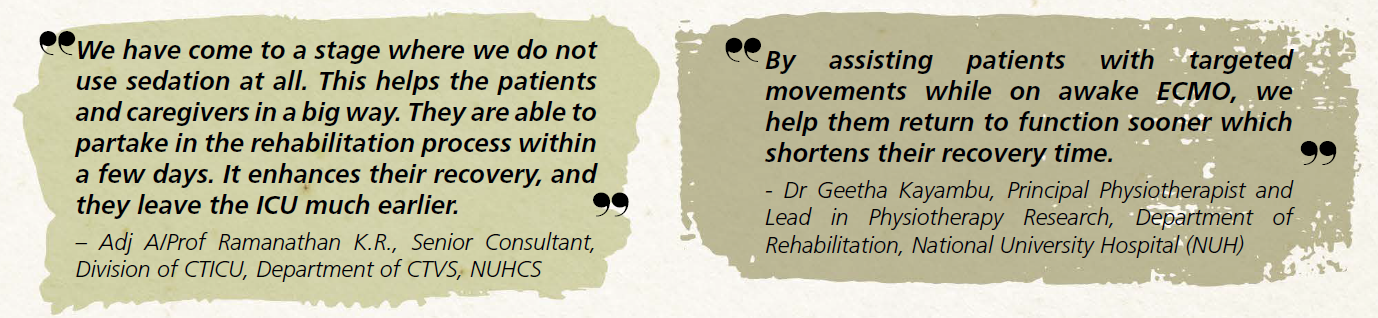
Most patients on ECMO are placed in medically induced coma for days. However, Gwendolyn's heart was too weak to withstand general anaesthesia, so the team at the Cardiothoracic Intensive Care Unit (CTICU) at NUHCS stepped in with an uncommon but promising approach - Awake ECMO: a form of life support where patients remain conscious and actively engage in physical rehabilitation to aid in their recovery.
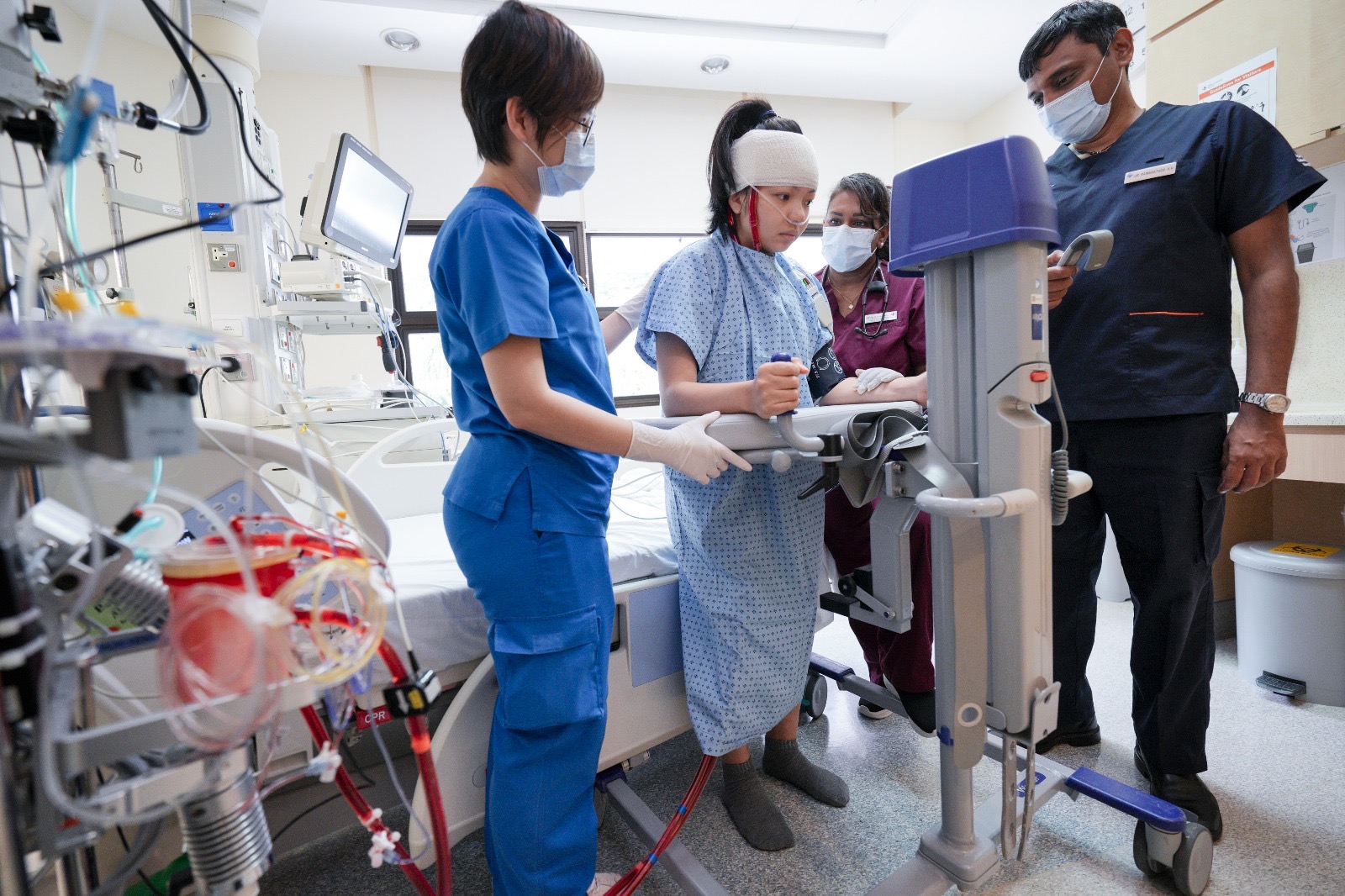
A multidisciplinary team from NUHCS and NUH providing physical rehabilitation to patients on awake ECMO to improve muscle strength and speed up recovery. (Image is a simulation of the awake ECMO process by medical professionals, created for educational purposes.)
In an ICU environment where being unconscious is the norm, Gwendolyn remained conscious, receiving gentle, targeted physiotherapy from the very beginning. CTICU nurses and physiotherapists worked closely with her, initiating gentle exercise sessions which included assisted stretching and mobility drills to prevent rapid loss of muscle mass as a result of prolonged inactivity in an ICU setting. Research has shown that early physical rehabilitation in ICU patients can alleviate or prevent weakness syndromes, improve muscle strength, as well as decrease the duration of mechanical ventilation and length of ICU and hospital stay. These early interventions paid off - Gwendolyn was able to come off her life support in just four days, half the usual duration for a patient on traditional ECMO.
Today, Gwendolyn is back in nursing school and has also resumed hiking – something she has always loved. Her journey is a testament to not only her strength, but to the impact of her multidisciplinary care team and the potential of awake ECMO in supporting survival and a faster, more complete recovery.
I am thankful that the medical team decided on awake ECMO as I knew how intubation could possibly lead to a longer recovery process instead.
- Gwendolyn Lye
Placed on Life Support. Lost a Limb.
Today, Dancing Again.
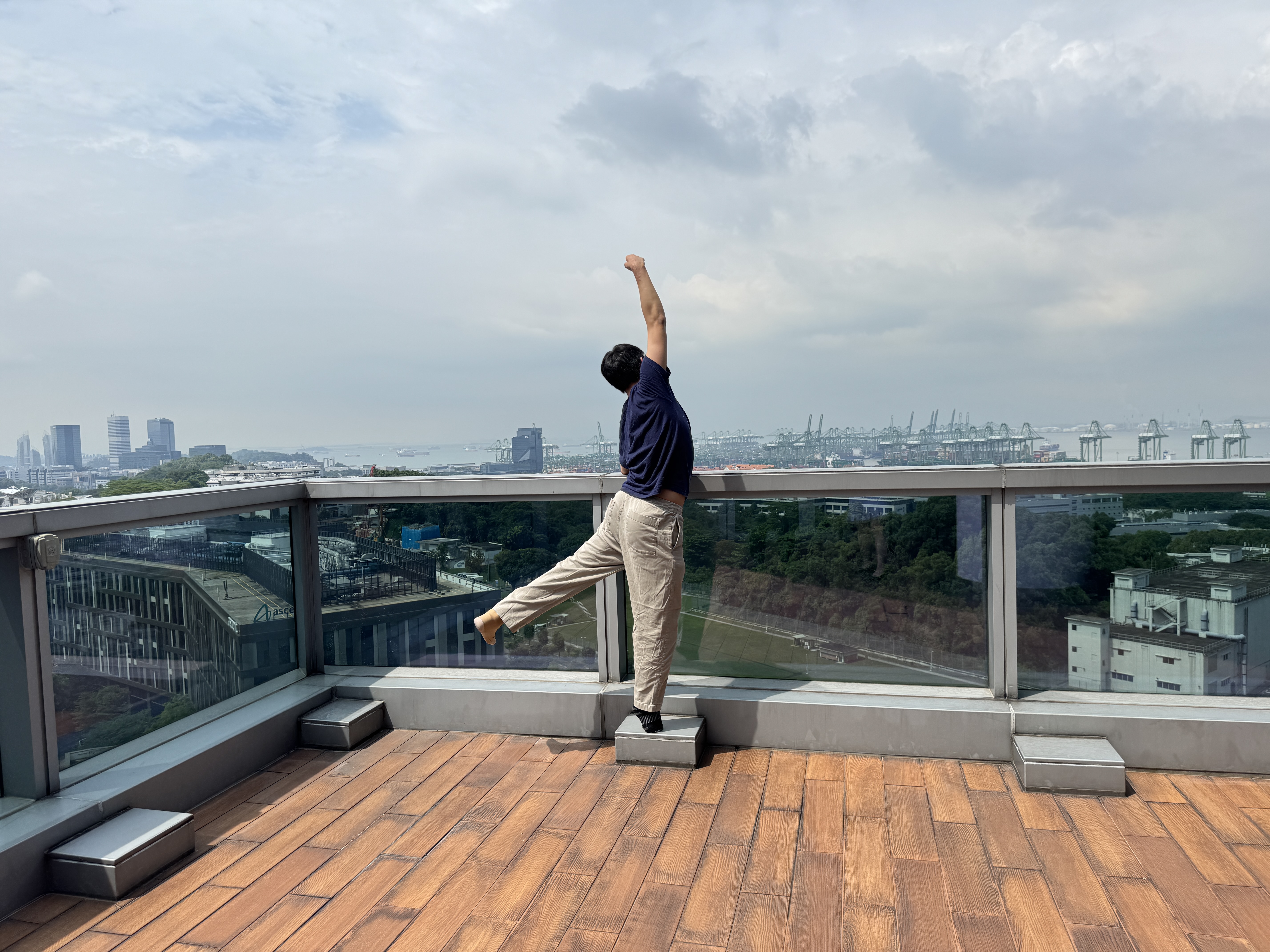 Dancing has always been the passion of Nathan Tan*. However, after a severe case of pneumonia1, the 30-year-old had to be placed in an induced coma and on extracorporeal life support. More devastating news followed - Nathan’s fingers and right leg below the knee would have to be amputated after his infection had caused gangrene2.
After awaking from life support to such life-altering news, Nathan feared such a loss would not just be physical, but existential, as he may never be able to dance again.
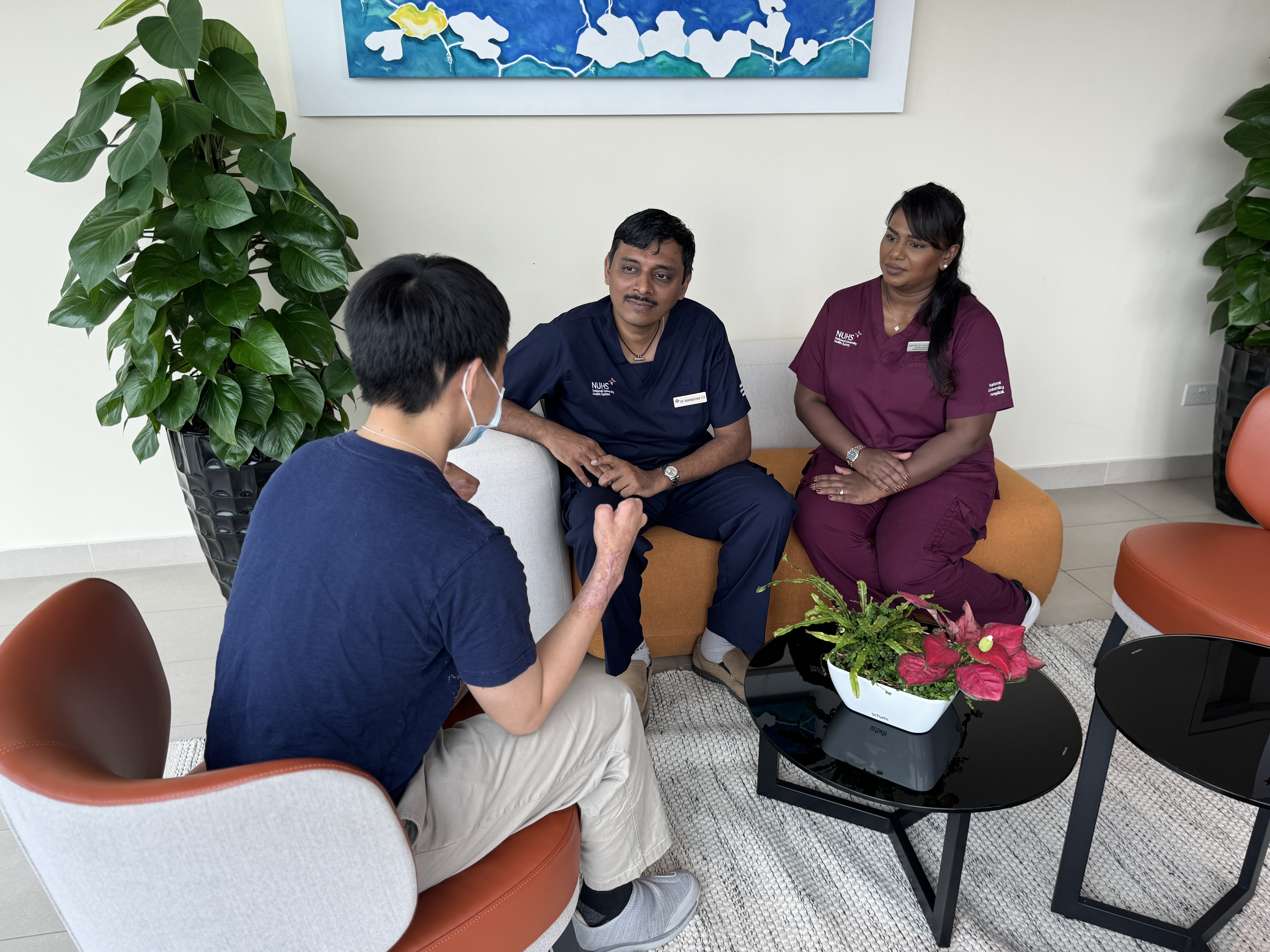 However, the team at NUHCS and NUH saw more than just a critically ill patient; they saw someone fighting for his identity. Physiotherapists began bedside rehabilitation while Nathan was still in the ICU, using cycle ergometry to build strength. They later incorporated personalised dance-inspired movements into his rehabilitation exercises, acknowledging how central dance was to his recovery. Their encouragement played a pivotal role in helping him regain confidence and eventually return to the art form he loves.
Taking a shower and eating suddenly became very difficult. Thanks to the medical team and social workers working together, they helped me adapt and restore my daily routine.
- Nathan Tan
With Nathan’s strong willpower and support from his rehabilitation team, he has not only returned to work, but has also returned to dancing. He continued physiotherapy at Alexandra Hospital for six more months. In February 2024 – less than a year after losing his leg – Nathan danced again.
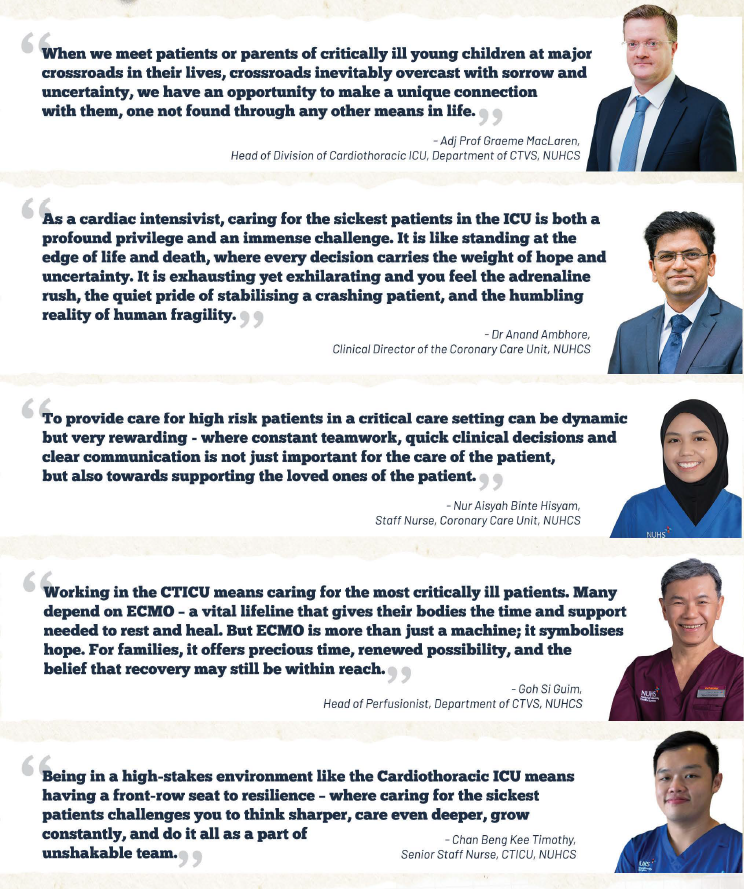
Meet some of the people who care for the sickest hearts
"NUHCS will continue to lead innovation in the care of critically ill heart patients by focusing on three key areas. First, improving outcomes even before patients arrive at the hospital - through early detection of out-of-hospital cardiac arrests, reducing emergency response times, and expanding training in CPR and AED3 use. Second, optimising and preserving organ function - especially of the heart, brain and kidneys - through the judicious use of advanced support systems such as ECMO and cVADs. Third, maximising quality of life after critical illness, enabling patients to return to active, meaningful lives in the community through comprehensive cardiac rehabilitation.
Looking ahead, a bold and meaningful goal for NUHCS is to delay the onset of critical illness by addressing the root causes of cardiovascular disease much earlier in life - ultimately enhancing the health span of our population."
- A/Prof James Yip, Executive Director, NUHCS
Life-Saving Devices and How They Work
ECMO
Extracorporeal Membrane Oxygenation (ECMO) is an artificial heart and/or lung machine that supports the body when a person’s heart and/or lungs are too sick to carry out their normal functions. ECMO does not treat the disease but allows the heart and/or lungs to rest and recover. It also enables necessary treatments and investigations to be carried out while providing vital organ support.
How it works: ECMO continuously pumps blood out of the body and passes it through an artificial lung (also known as an oxygenator), which provides oxygen and removes carbon dioxide. This oxygenated blood is then pumped back into the body.
cVAD
Catheter-based left Ventricular Assist Device (cVAD) are small mechanical pumps that temporarily replace a patient’s heart function. These devices are used in patients who remain critically ill despite the initiation of medications to improve heart pumping function.
How it works: The cVAD is inserted into the heart’s left ventricle through a small incision in the groin. Once in place, it monitors how well the heart is pumping blood. If the heart begins to struggle during the procedure, a small motor inside the pump kicks in to help by moving blood from the left ventricle into the body’s main artery (the aorta), ensuring continued circulation throughout the body. This support is vital for patients whose hearts are too weak to maintain adequate blood flow on their own. The pump helps “top up” the heart’s output, keeping the patient stable and ensuring their body gets the blood flow it needs.
ECPELLA
ECPELLA is a treatment for cardiogenic shock that simultaneously integrates the ECMO and cVAD. As a national specialty centre, NUHCS is the only public institution in Singapore equipped with a multidisciplinary team of cardiogenic shock specialists trained to provide this lifesaving ECPELLA support. Their expertise once gave Kang Zi Ying, a polytechnic student, a second chance at life. Read more about her inspirational story in Pulse Issue 42!
How it works: The ECMO device takes over the heart and lung functions, ensuring sufficient blood circulation in the body. Meanwhile, the cVAD allows blood from the heart’s left chambers to flow out of the body, thus reducing cardiovascular burden and preventing further complications.
CTICU Fellowship Programme at NUHCS: Keen to learn what it takes to be a part of this multidisciplinary critical care team? Hear from our Intensivists4 and global fellows5 who have trained with us, as they share how they empower one another in their combined mission to make a meaningful difference in the lives of cardiac critical care patients.