Small Incision, Big Impact
PULSE Issue 46 | Jan 2026
NUHCS introduces Singapore's first minimally invasive CryoMaze treatment for Atrial Fibrillation.
When a flutter becomes a warning
It often begins quietly: a flutter in the chest, a skipped beat, or a moment of breathlessness. Many brush it aside, but for a growing number of people, these signs point to Atrial Fibrillation (AF)1, the most common heart rhythm disorder that affects about 597 million people globally2. At the National University Heart Centre, Singapore (NUHCS), more than 80% of patients seen each year are affected by heart rhythm disorders, with about 10% related to AF2.
Evolving treatment options for valvular AF
Patients who suffer from heart valve conditions - including narrowed valves, improper closure of valve or floppy valves that causes leakage of blood flow - can often be treated through minimally invasive keyhole surgery, which avoids opening the chest and allows for faster recovery.
However this changes once AF enters the picture.
Patients who require heart valve surgery and have AF become ineligible for minimally invasive approaches, as complete surgical ablation for AF could only be performed through a conventional median sternotomy - where the chest is fully opened. As a result, even patients who were ideal candidates for minimally invasive valve repaire previously had to undergo open-chest heart surgery if AF was involved.
Conventional open-chest surgical ablation - using heat (radiofrequency) or cold (cryoablation) energy - has a documented success rate of over 70% in preventing AF recurrence2. However, they fully open-chest approacg involves a significantly longer recovery time, often requiring two to four months before patients can return to their usual activities.
First to offer minimally invasive keyhole surgery
With AF cases getting more prevalent especially in this ageing population, NUHCS is spearheading the field of cardiac surgery by offering safer, less invasive options that reduce surgical risks and accelerate recovery.
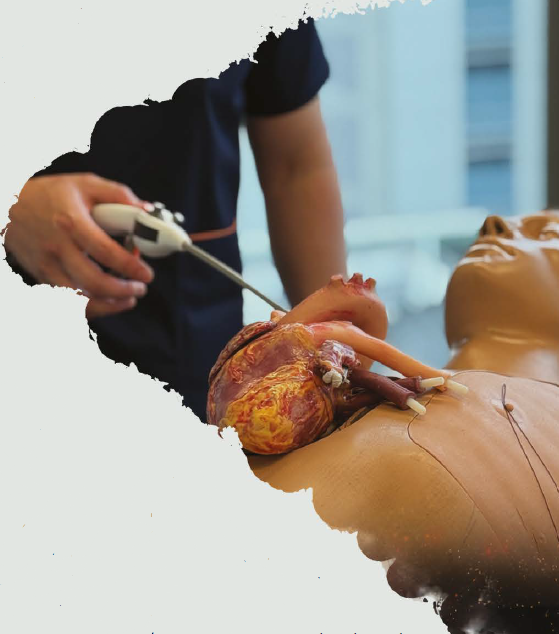
In July 2024, NUHCS performed Singapore's first minimally invasive CryoMaze ablation for eligible patients with both valve conditions and AF. Since then, nine patients have undergone this procedure, also known as minimally invasive CryoMaze.
How the minimally invasive CryoMaze works
The CryoMaze technique uses extreme cold to create controlled scar lines that block abnormal electrical signals in the heart. Through a small keyhole incision between the ribs, a medical probe is guided into the heart, allowing surgeons to perform a complete CryoMaze patterns without opening the chest. By targeting a complete block of affected tissue, including areas that traditional thermal ablation may miss, the procedure offers a more reliable restoration of the heart's natural rhythm.
This minimally invasive approach enables faster recovery and shorter hospital stays, allowing patients to return to their daily routines sooner. The advanced CryoMaze technique can also be used to numb surgical wounds, reducing post-operative discomfort and enabling patients to move more freely shortly after surgery.
An AF patient's journey to recovery
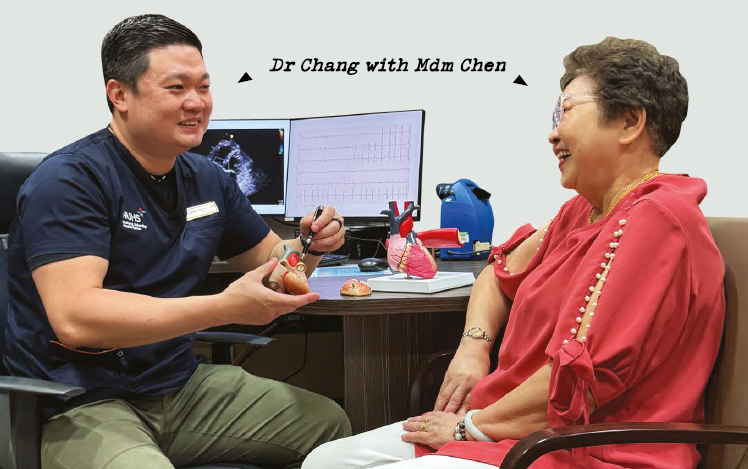
Mdm Chen, a 70-year-old housewife, was unaware she had a heart condition until she began experiencing breathlessness while walking and swelling in her legs. Dr Chang Guohao, Consultant, Division of Adult Cardiac Surgery, Department of Cardiac, Thoracic and Vascular Surgery (CTVS), NUHCS, diagnosed her with tricuspid valve prolapse3 which disrupted normal blood flow and triggered an irregular heartbeat - AF. Given her age and pre-existing conditons, traditional open-chest heart surgery would have posed significant risks. Following Dr Chang's recommendation, Mdm Chen underwent minimally invasive CryoMaze ablation. She experienced minimal post-operation pain, required only an eight-day hospital stay, and subsequent follow-ups showed no abnormalities, with her heart rhythm fully restored.
Redefining what heart surgery can be
By combining this cutting-edge keyhole surgery with other minimally invasive procedures in one seating, minimally invasive CryoMaze offers hope to patients suffering from both valve conditions and AF.
"With minimally invasive CryoMaze now available at NUHCS, not only is the AF treatment safer and less traumatic for eligible patients with valvular heart conditions and requiring surgical ablations, but their recovery time is also reduced by about half." - Dr Chang Guohao
This innovative procedure provides a glimpse into the future of AF treatment, where smaller incisions can deliver bigger outcomes in reducing the global burden of this heart rhythm disorder.
Unlocking a new treatment pathway for patients whom previously had no option but open-chest heart surgery, CryoMaze embodies NUHCS' commitment to advancing cardiovascular care in step with evolving healthcare needs.
References:1. Atrial Fibrillation - Irregular, and often very rapid, heartbeat on the upper chambers, causing abnormal blood flow.
2. National University Heart Centre Singapore. (2025, October 17). NUHCS is first in Singapore to offer minimally invasive surgical alternative for patients suffering from dangerous heart rhythm disorder [Media Release]. https://www.nuhs.edu.
sg/docs/default-source/newsroom-document/nuhs/2025/10-oct/final-media-release---nuhcs-miscryomaze-(002).pdf
3. Tricuspid valve prolapse - Where the heart valve leaflets bulge into the right atrium, during each heartbeat, causing backflow of blood.