Taking Heart Health To The Heartlands
Inside NUHCS World Heart Month 2025 at Keat Hong Community Club
PULSE Issue 46 | January 2026
Cardiovascular disease remains the leading cause of death worldwide, claiming one in five lives prematurely. In Singapore, the impact is even greater — nearly one in three deaths is due to heart disease or stroke. Alarming statistics reveal that heart attacks among younger adults are on the rise, with up to 20 per cent of people under 40 already suffering from high blood pressure, high cholesterol, or both.


Recognising this urgent public health challenge, the National University Heart Centre, Singapore (NUHCS) partnered with community organisations to organise World Heart Month 2025. By bringing vital heart health education and screenings directly to the heartlands, the event empowered Singaporeans to understand their cardiovascular health and take small, practical steps toward prevention.
On 13 September 2025, more than 800 participants gathered at Keat Hong Community Club for World Heart Month 2025. The event featured a lively mix of health checks, educational talks, and interactive activities designed to engage people of all ages. Participants left not only better informed but also motivated to incorporate healthier habits into their daily lives.
Health Checks For Early Detection
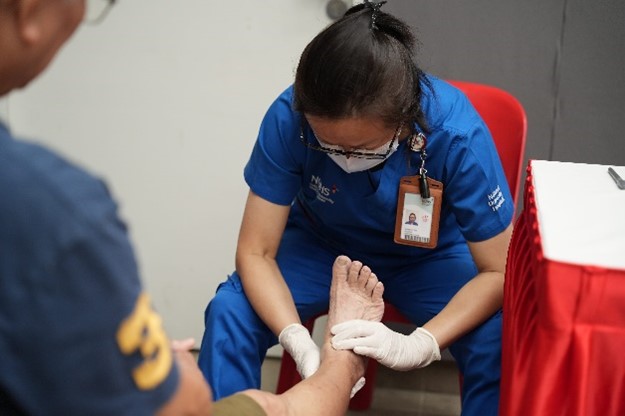
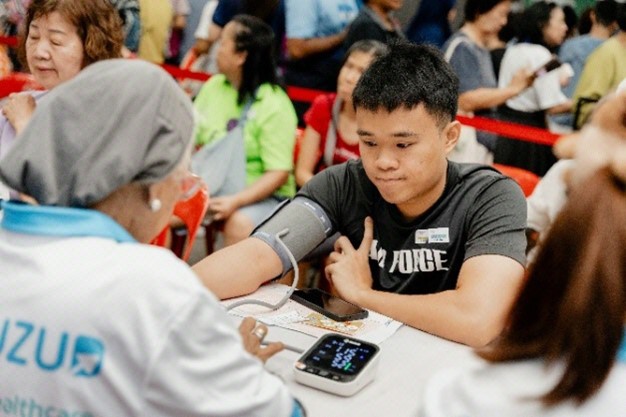
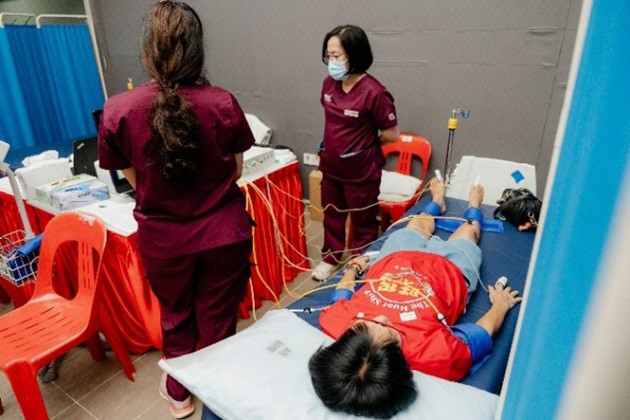 Early detection can save lives. NUHCS offered a range of assessments, including Electrocardiogram (ECG)1 tests, blood pressure, cholesterol, and blood sugar checks. The NUHCS nursing and vascular medical technologist team also screened for Peripheral Arterial Disease (PAD)2 on-site. Physical examinations of participants’ legs and feet helped identify signs of PAD, and those with abnormal findings could undergo an Ankle-Brachial Index (ABI) test3 to assess for narrowed arteries in the limbs. Following the assessments, nurses provided personalised advice on foot care and referred participants to polyclinics or General Practitioners (GPs) for further medical follow-up when necessary.
Talks And Activities For Better Health
Beyond health screenings, the event featured an engaging line-up of informative health talks and fitness activities. Adj A/Prof Lim Toon Wei, Head of Community Cardiology, NUHCS, delivered a talk titled “When Your Heart Misses a Beat —Should You Worry?”, where he shed light on irregular heart rhythms, when to seek medical attention, and the importance of timely intervention.
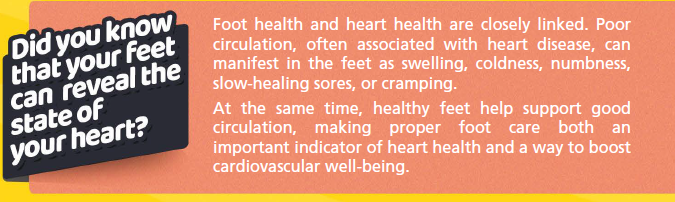
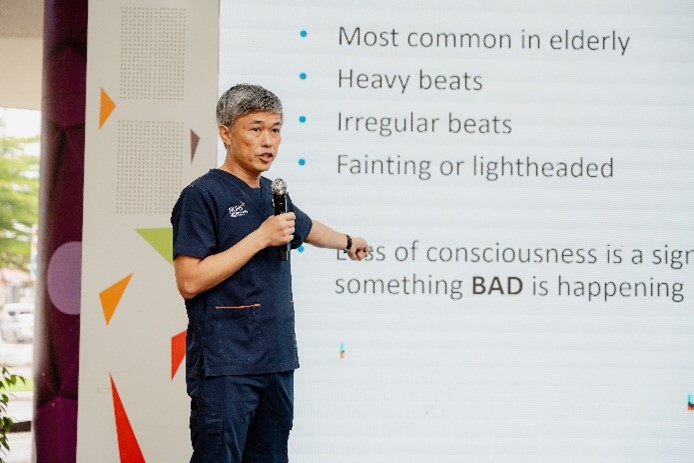
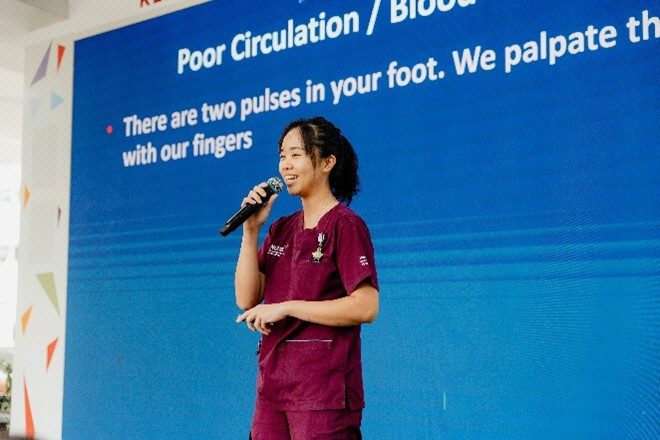

Complementing this, Ms Vanessa Teo, Senior Podiatrist4, Department of Rehabilitation, National University Hospital (NUH), presented “Caring For Your Feet — Practical Tips For Good Foot Health”, offering practical advice on maintaining healthy feet as part of overall cardiovascular care.
After the talks, participants were encouraged to put knowledge into action. Mr Qamaruzaman Bin Syed Gani, Principal Physiotherapist, Cardiac Rehabilitation Unit, NUHCS, led a heart-healthy aerobic session, introducing simple yet effective exercises that participants could easily incorporate into their daily routines to support long-term heart health.
The World Heart Month event ended on an inspiring note, with participants walking away not only better informed but also motivated to take small, practical steps towards a healthier lifestyle. Mark your calendars – World Heart Month returns in September 2026 with more exciting activities and opportunities to learn, move, and live heart-healthy!
References:
- Electrocardiogram (ECG) – a non-invasive medical test that records the electricalactivity of the heart over time. This helps diagnose various heart conditions, including a bnormal heart rhythms and the effects of a heart attack.
- Peripheral Arterial Disease (PAD) – a common condition in which narrowed arteries - usually caused by a buildup of fatty deposits in the arteries - reduce blood flow tothe arms or legs. This may cause leg pain when walking, numbness, and possible limbamputation in severe cases.
- Ankle-Brachial Index (ABI) test – a simple, non-invasive diagnostic tool that comparesthe blood pressure in the ankles to that in the arms to detect Peripheral Arterial Disease.
- Podiatrists – allied health professionals who specialise in treating andpreventing disorders of the foot, ankle, and lower leg.