NUHS Institutions will NEVER ask you to transfer money or disclose bank details over a call. If in doubt, call the 24/7 ScamShield helpline at 1799, or visit the ScamShield website at www.scamshield.gov.sg.
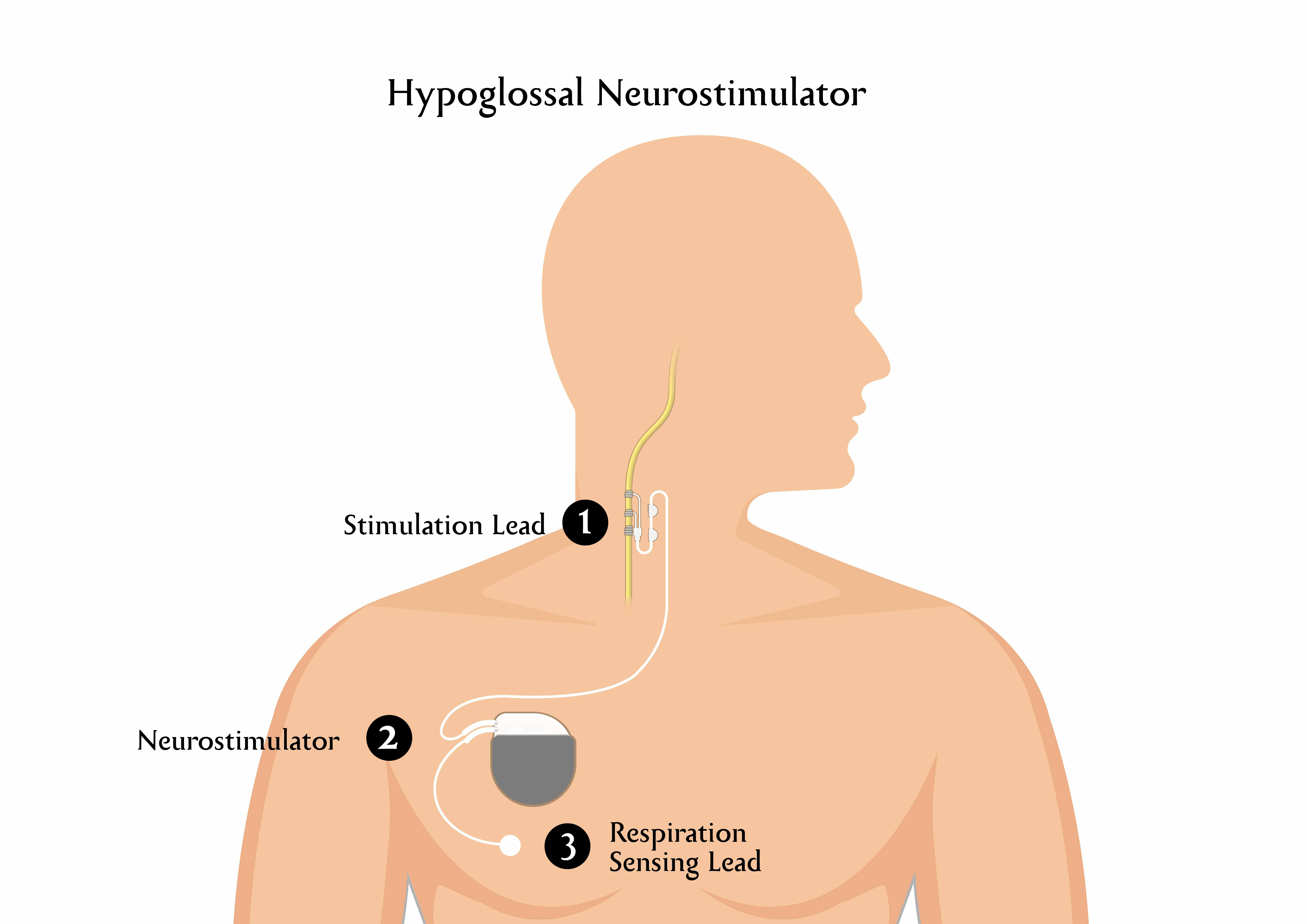
A small device implanted under the skin stimulates the hypoglossal nerve during inhalation. This causes the tongue to move forward instead of collapsing backward and blocking the airway during sleep.
Hypoglossal Nerve Stimulation is typically considered for patients with moderate to severe obstructive sleep apnea who cannot tolerate or do not respond well to the alternative treatment option - Continuous Positive Airway Pressure (CPAP) therapy. It is a surgically implanted, neurostimulation therapy designed to improve airway patency and reduce apnoea events, thereby improving sleep quality and reducing symptoms like daytime sleepiness.
What should I prepare?
You will need to undergo a sleep study, an airway evaluation, and an assessment of CPAP intolerance – to show that you cannot tolerate CPAP as Hypoglossal Nerve Stimulation is only offered to patients who have trouble using CPAP effectively. Your care team will check your anatomy and overall health to confirm if you are a suitable candidate for this treatment.
Success rate
Studies show about 68% reduction in sleep apnoea events after 12 months of treatment, with many patients experiencing better sleep and improved daytime alertness. Benefits are maintained for years in follow up studies.
Potential risks and complications
Temporary tongue soreness, incision site discomfort, or mild tongue weakness may occur but will usually improve with time or device adjustments. Serious complications are rare.
Home care
You will need to activate the device nightly with a remote and attend follow up visits for fine tuning.
When to call the doctor
If there is persistent tongue weakness, pain, difficulty using the device, or a sudden return of sleep apnoea symptoms. For any issues relating to the implant or remote, do report it to your care team promptly.